Clear Views Ahead: The Complete Guide to Foggy Glass Replacement
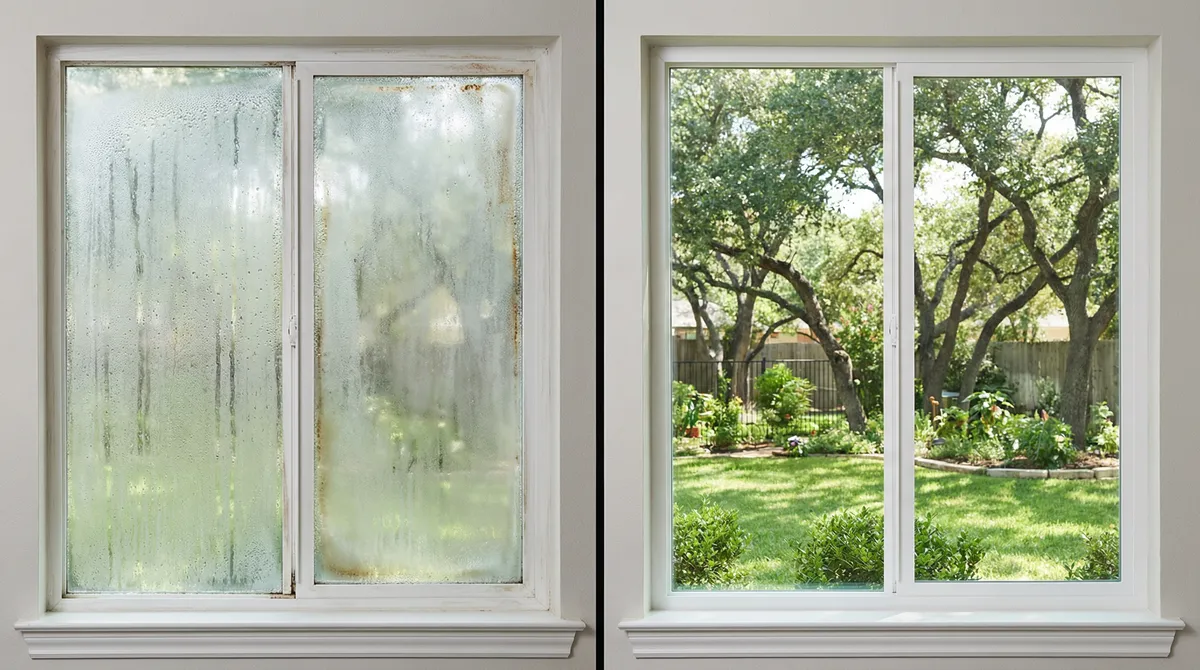
If you have a double-pane window that has developed a foggy or hazy look between the glass layers, you already know how frustrating it can be. The view is blurred, the room feels darker, and the window just looks old and neglected. That fog is not something you can simply wipe away. It is a sign that the seal on your insulated glass unit has failed, and the only real fix is a foggy glass replacement.
I have seen this problem in homes and commercial buildings across the DFW area for years. It happens when the seal around the edge of the glass breaks down. Moisture seeps in, and the silica desiccant inside the spacer bar eventually gets saturated. Once that happens, condensation forms inside the glass cavity. The result is that cloudy, milky appearance that no amount of cleaning will fix.
What Causes a Sealed Window to Fog Up?
Insulated glass units are constructed with two or more panes of glass separated by a spacer and filled with an inert gas like argon or krypton. The spacer contains a moisture-absorbing desiccant. This system is designed to keep the interior space dry and clear for many years. But no seal lasts forever. Temperature swings, sun exposure, and even minor building settling can stress the seal. Once the seal is compromised, moisture enters and the desiccant cannot keep up. The glass fogs.
I have also seen cases where the seal was never great from the start. Budget windows sometimes use lower quality sealants or thinner spacers. These units may only last five or six years before fogging. Higher-end windows can last twenty years or more, but they are not immune. The point is, when the fog appears, the unit has lost its insulating value too. You are paying for heat loss or gain through that window, even if the glass itself feels cool.
Is Repair Possible or Is Replacement Necessary?
A common question people ask is whether they can just have the seal repaired. The short answer is no. Once the seal fails and moisture enters the cavity, the damage is done. The desiccant is saturated, the gas has escaped, and the interior surfaces of the glass may have mineral deposits or etching from the condensation. There is no practical way to clean inside a sealed unit and then reseal it to factory specifications. A repair would leave visible marks and would likely fail again quickly.
Some companies offer a service where they drill a small hole in the glass to let the moisture escape, then plug the hole. This does clear the fog temporarily, but it also lets the gas escape permanently. The window then acts as a single-pane unit with much worse insulation. It may also trap dirt and bugs inside over time. I do not recommend it for anyone who wants to keep their energy bills under control or maintain their home's value.

The only lasting solution is a foggy glass replacement. This means removing the entire sash or the glass unit itself and installing a new sealed unit. For many windows, especially older ones, it makes more sense to replace the whole sash or even the entire window. But if the frame and sash are in good shape, you can often just order a new insulated glass unit and have it installed.
How the Replacement Process Works
When I walk a homeowner through a foggy glass replacement, I start by measuring the existing unit precisely. The thickness of the glass and the spacer, the overall width and height, and the type of edge seal all matter. Ordering the wrong size or type can mean the glass does not fit or fails early. I always recommend using a local glass supplier who can build the unit to match the original specifications, including the gas fill and the spacer material.
After the new unit arrives, the old one is carefully removed. This can be tricky because the glass is heavy and the frame may have brittle glazing stops or clips. I have seen people crack the frame trying to remove the glass themselves. A professional will use the right tools and know how to avoid damaging the surrounding window structure. Once the old unit is out, the frame is cleaned of old sealant and debris. Then the new unit is set in place with fresh sealant and new glazing beads or stops.
The whole job usually takes about thirty minutes to an hour per window, depending on access and complexity. For a typical home with a few foggy windows, it is a same-day service. For commercial buildings with large panes or multiple floors, the job may take longer and require specialized equipment like a crane or suction cups.
When to Replace vs. When to Upgrade
If your windows are more than fifteen years old and you have several that are foggy, it might be worth considering a full window replacement instead of just a glass unit swap. New windows offer better insulation, improved coatings, and sometimes tax credits or rebates. But if you have a historic home or a custom frame that would be expensive to replace, a glass-only replacement is often the smarter choice.
I have also worked with homeowners who wanted to upgrade from clear glass to low-e glass during the replacement. That is usually possible, as long as the spacer matches the frame width. Low-e coatings reflect heat and UV rays, keeping your home cooler in the summer and protecting furniture from fading. It is a worthwhile upgrade if you are already paying for the replacement labor.
Costs and Considerations
The cost of a foggy glass replacement varies widely. A standard double-pane unit for a typical home window might run from one hundred fifty to three hundred dollars for the glass itself, plus labor. Larger or custom shapes cost more. Specialty glass like tempered or laminated also adds to the price. In a commercial setting, the cost can be much higher due to size, safety requirements, and access issues.
I always advise getting at least two quotes from reputable local companies. Ask whether the quote includes removal of the old unit, disposal, and any warranty on the new glass. A good installer will stand behind their work for at least a year. Some manufacturers offer a five-year or even ten-year warranty on the seal. That is a sign of a quality product.
Another factor is the type of window. Casement windows, awning windows, and fixed picture windows all have different frame designs. Some are easier to replace than others. Sliding windows and double-hungs require more care because the sash must be removed and reinstalled properly. A professional will know the quirks of each type.
What About Condensation on the Outside or Inside?
Not every foggy window is a seal failure. Sometimes you see condensation on the interior surface of the glass in cold weather. That is usually a humidity issue inside your home, not a window defect. Similarly, exterior condensation can form on low-e glass in certain conditions. Neither of those requires replacement. The fog I am talking about is between the panes. If you press on the glass and the fog does not move or smear, it is inside the sealed unit.
If you see a film or residue on the inside of a single-pane window, that is just dirt or smoke buildup. Clean it with a good glass cleaner and a microfiber cloth. But if you see that same film between two panes of glass, you have a failed seal.
Long-Term Prevention
Once you replace a foggy unit, you want to make sure it lasts. The best way to prolong the life of any insulated glass unit is to keep the window frame and surrounding area in good condition. Check the caulking around the frame annually. Make sure the weep holes on the bottom of the frame are not clogged. If water cannot drain, it can pool against the glass seal and accelerate failure.
Also, avoid pressure washing your windows directly. High-pressure water can force moisture past seals that would otherwise hold. And if you live in an area with extreme temperature swings, consider using shades or blinds to reduce the temperature difference between the inner and outer panes. That helps reduce stress on the seal.

For commercial buildings, regular maintenance of the exterior sealants and gaskets is key. I have seen large curtain wall systems fail because a single gasket dried out and let moisture in. A simple annual inspection can catch those issues before they cause fogging.
If you are dealing with a foggy window in your home or business, the best path forward is a professional assessment. A trained technician can tell you whether a simple glass unit swap will work or if you need a full sash replacement. They can also advise on upgrades that save energy and improve comfort.
For residents in the DFW area, Apex Windows & Glass, located at 7200 W University Dr, McKinney, TX 75071, USA, phone +1 214-263-3008, is a DFW-based window and glass replacement company specializing in foggy glass repair, commercial glass services, and whole-home window replacements with warranties and free estimates. They can help you get clear views back in your home without the guesswork.
Connect with us on Instagram.